Everest
The Madness and the Macabre

It’s Everest season again—May, when the jet stream lifts and climbers flood the mountain. I’ve been on that mountain, but it’s changed dramatically over the decades. There was a time when Everest demanded everything — strength, judgment, and experience. Today, I see climbers stacked in lines at the Hillary Step, many reliant on bottled oxygen and the unflagging support of Sherpas, and I can’t help but think that the world’s most iconic mountain has lost its gravity and its respect. What was once a test of the highest mountaineering skill has been packaged, commercialized, and sold. When the summit becomes a bucket-list photo op instead of a crucible, something essential is lost.
Perhaps I’m a purist, but I don’t believe in taking the easy way to the top, in climbing or in life. After all, I spent a good chunk of my career writing The Hardway. Mountaineering is a challenge and a risk; therein lies the reward.
Tomorrow, I’m headed to Ecuador with two buddies to attempt new routes on Mt. Chimborazo, the country’s highest peak. Without oxygen and fixed lines, our expedition requires months of training, planning, securing our own permits, and carrying all our own gear. It’s a chance to return to what I consider real mountaineering.
Onward!
I first attempted Mount Everest in 1986. I was a climber on the U.S. North Face Everest Expedition. Every team member was an accomplished alpinist. All of us had ascended numerous big mountains around the world and summited at least one 8000- meter peak. You had to submit a climbing resumé to even be considered for this national expedition.
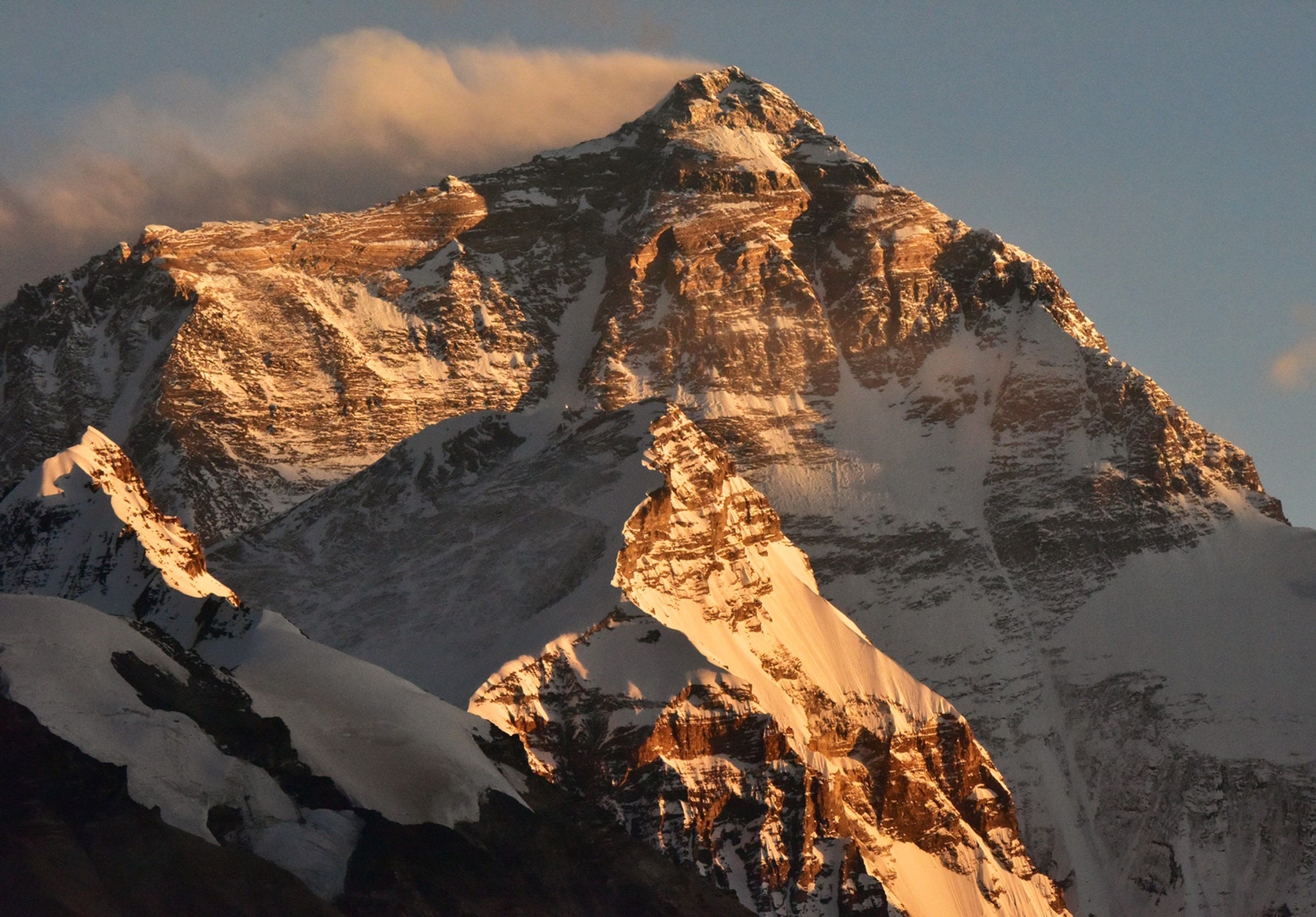
We slept in Chinese Army barracks in Lhasa and rode in the back of Chinese Army trucks across the tundra of Tibet to Everest. We were the only team on the north face---nine tiny humans at the base of a 9000-foot wall of blue ice (the height of seven Empire State Buildings). We had no porters, no Sherpas. We did everything ourselves. I remember I made 17 carries from Camp 1 to Camp 2---17 days of humping loads of food, fuel and ropes. I spent three weeks above 20,000 feet. We each led many pitches. We each had a voice in determining the route.
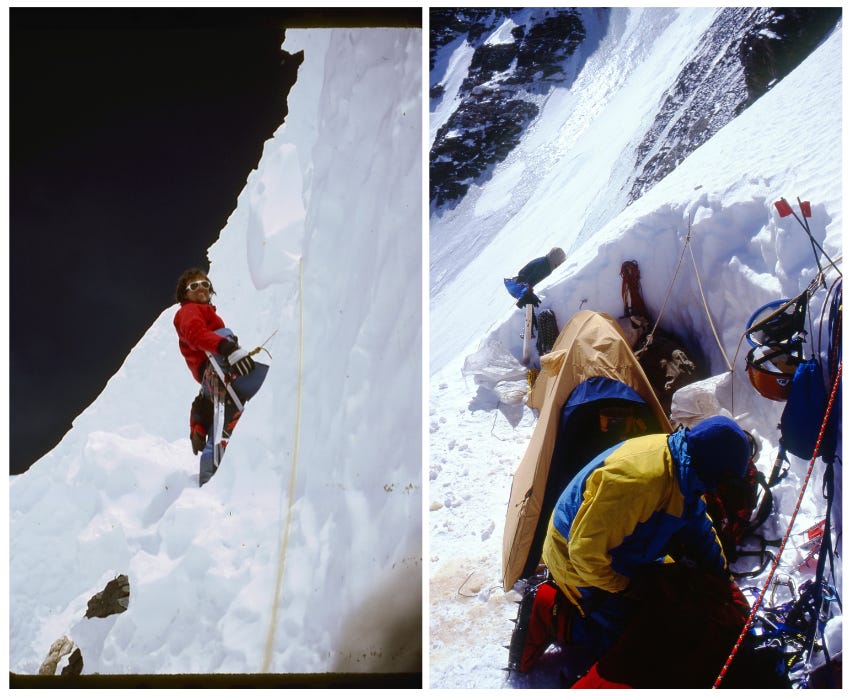
After 75 days on the north face, in late May, the South Asian monsoon began, bringing heavy snow to Everest. Avalanches started sweeping the wall. We were forced to retreat, humbled. The essence of mountaineering is knowing how to make good decisions in bad situations. We had reached 8000 meters, 26,000 feet, and never used oxygen. We each lost 25 pounds. One climber got frostbite, one got pleurisy, one dysentery. We made mistakes, but no one died, and I left the mountain knowing I’d given it my best shot.
I had no interest in returning to Everest. It took too long. There were too many other peaks on the planet to pursue. But, 26 years later, National Geographic asked me to be the writer for an expedition celebrating the 50 th anniversary of the first American ascent of Everest. On May 1 st , 1963, a decade after Edmund Hillary and Tenzing Norgay stood on top, Rainier mountain guide Jim Whittaker, with Sherpa Nawang Gombu, became the first American to reach the summit of Everest. They climbed the South Col, which would become the standard route. Three weeks later, in an unprecedented act of boldness, Tom Hornbein and Willi Unsoeld clawed their way up a completely unknown route: the West Ridge. On that same day Barry Bishop and Lute Jerstad climbed the South Col route. The two American teams met up with each other, but it was late in the day and they were forced to bivouac at 28,000 feet. Without tents or sleeping bags, no one believed they would survive.
“God they were lucky,” Jim Whittaker told me. “If there had been any wind, they would have all perished!”
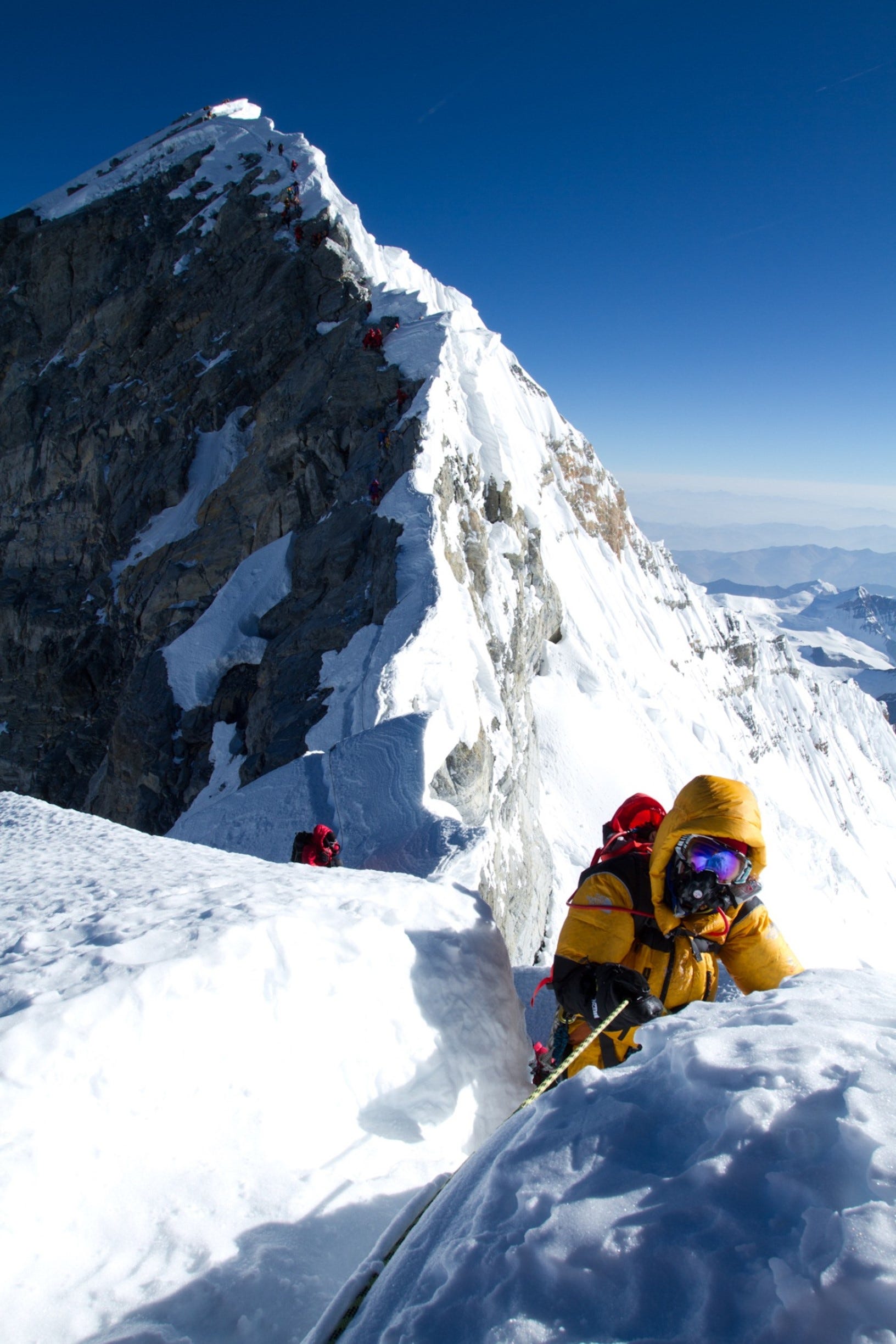
As it was, the four climbers lived (although Unsoeld and Bishop lost all their toes to frostbite), and the ’63 expedition was a heroic American success. President Kennedy sent a telegram: “For pushing human endurance and experience to their farthest frontiers … I know all Americans will join me in saluting our gallant countrymen.” Astronaut John Glenn likened the accomplishment to going into space. It’s May 2012 and I’m back on Everest. I’m at 25,000 feet on the South Col. Below me are over 100 climbers trudging nose-to-butt up the ropes like cattle; above me are another hundred climbers. It’s dangerous. The ropes were not designed for that much weight. I unclip from the rope, get out my ice axe, and begin freely scaling the snow and ice alongside the centipede of climbers, passing one after another.
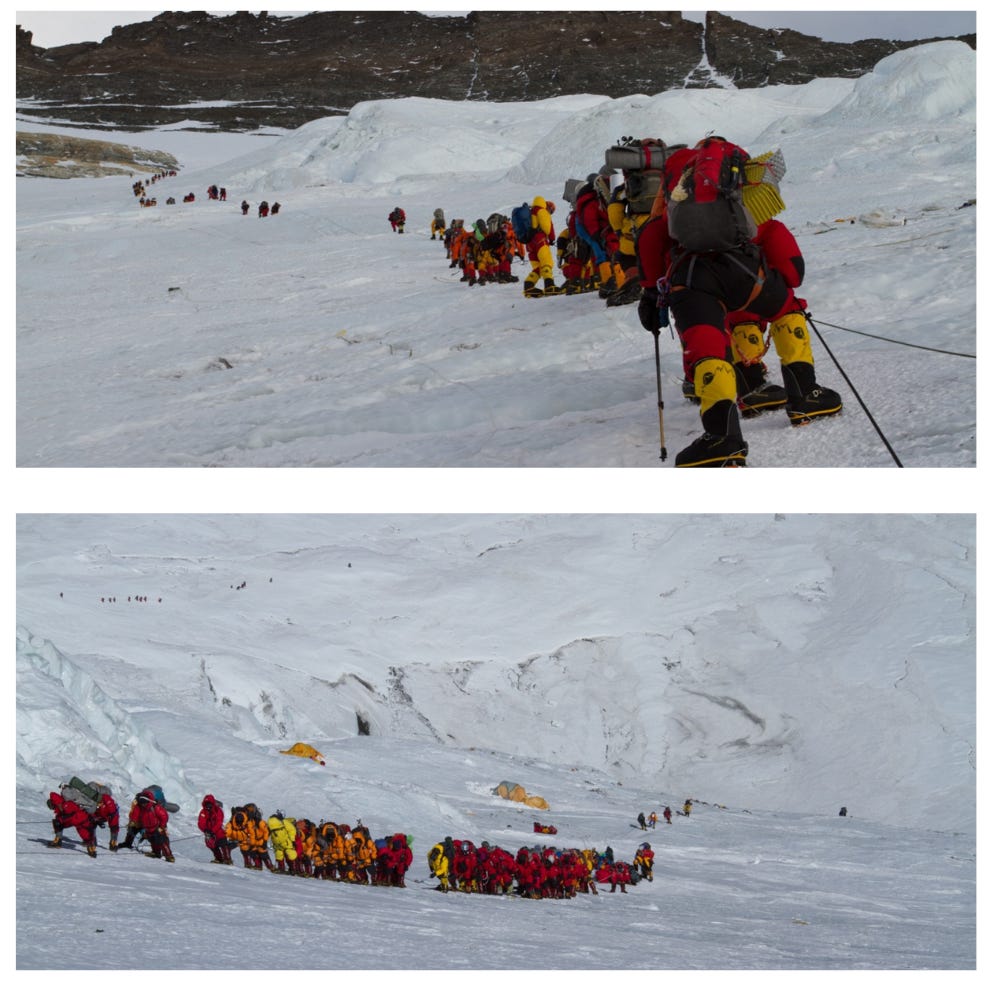
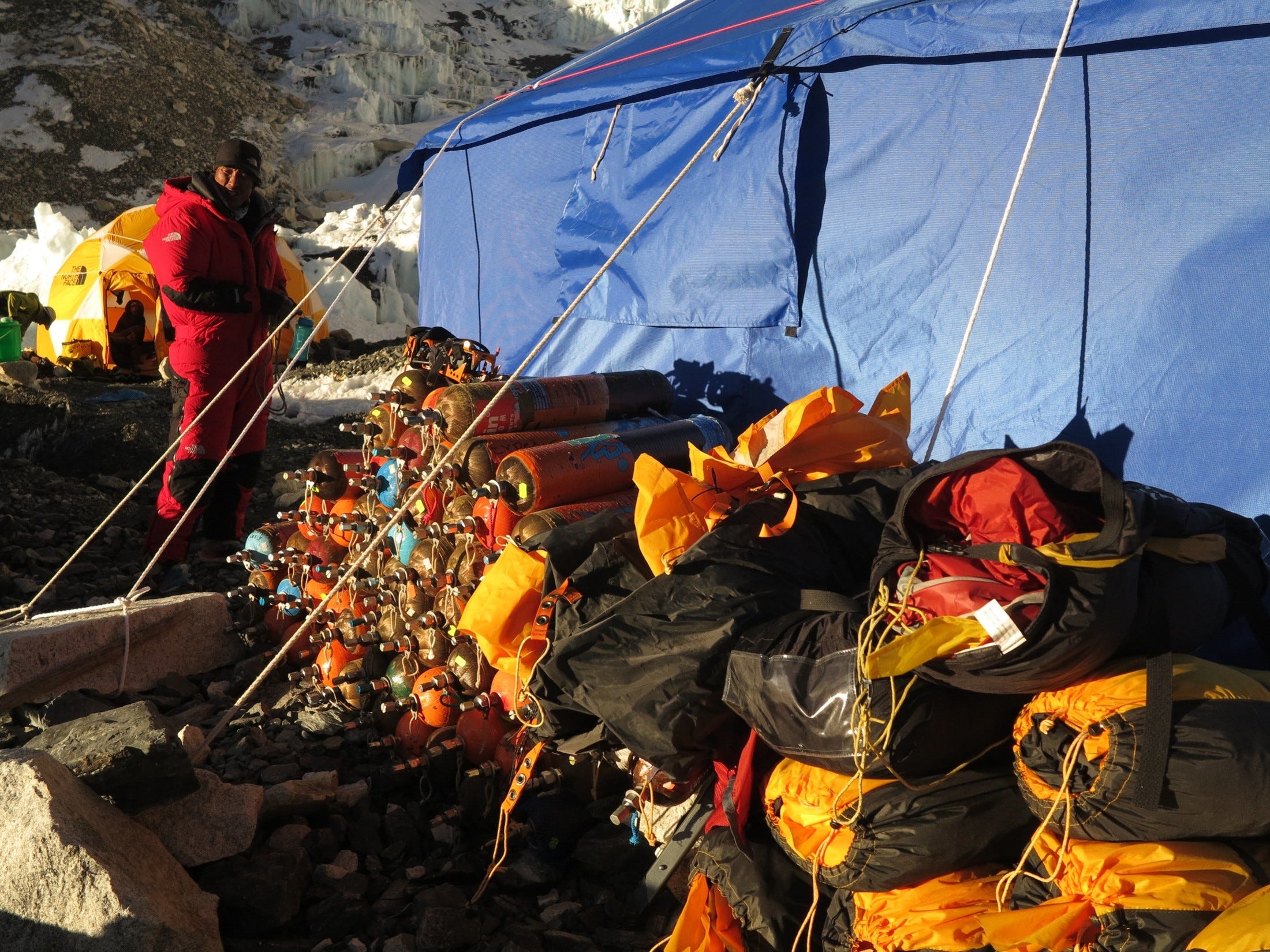
Everest changed forever, and for the worse, when guiding was introduced in the 1990s. Today the mountain is clogged with more wealthy clients than dirtbag climbers. All the heavy-lifting has been outsourced to Sherpas. Sherpas put up all the ropes, Sherpas put in all the camps, Sherpas carry all the loads, Sherpas do all the cooking, and Sherpas escort the climbers to the top carrying their oxygen. Without Sherpas, fixed lines, and the use of supplemental oxygen, there would be no guiding on Everest. The highest mountain on earth would still be the exclusive domain of high-altitude mountaineers.
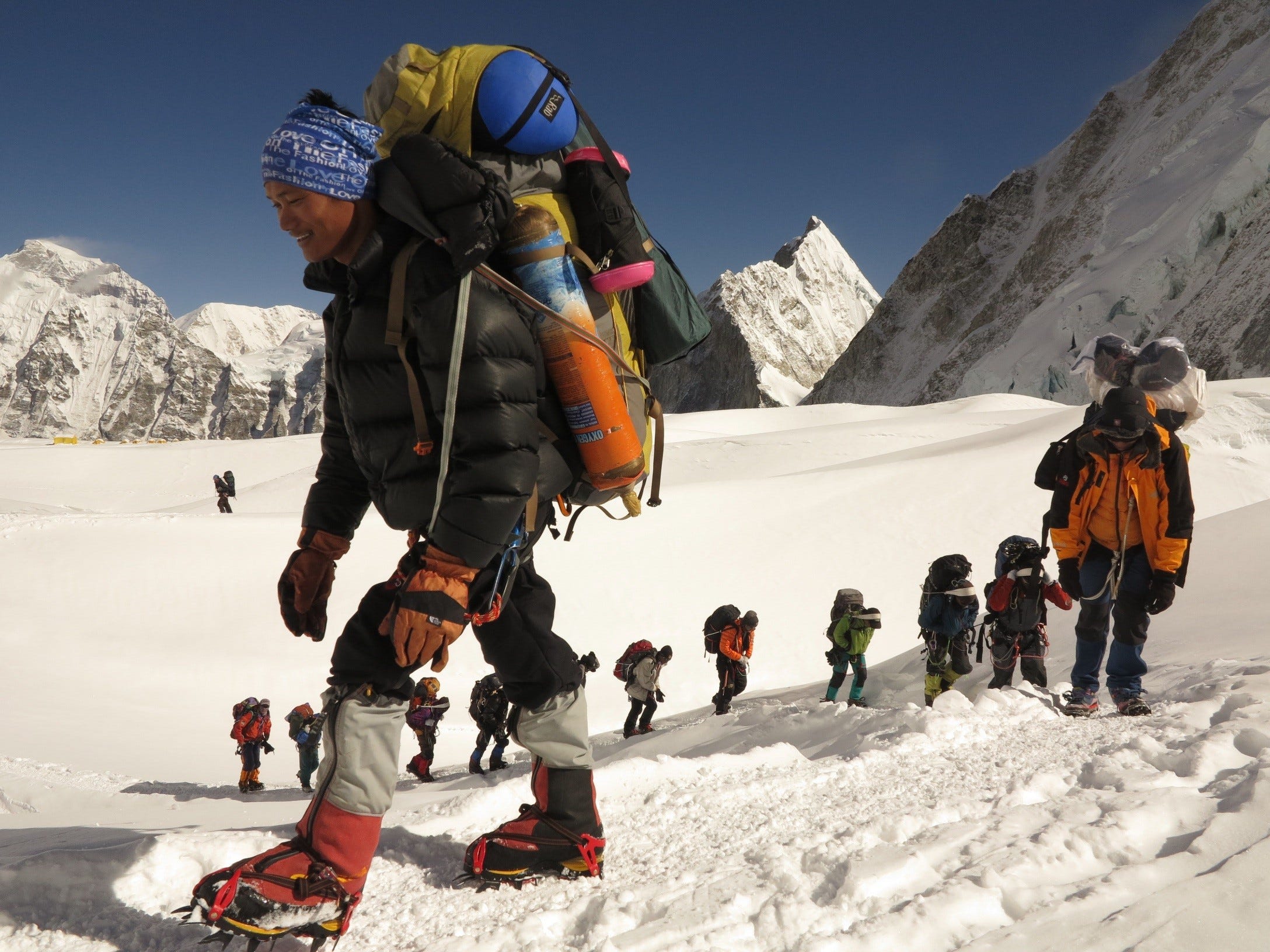
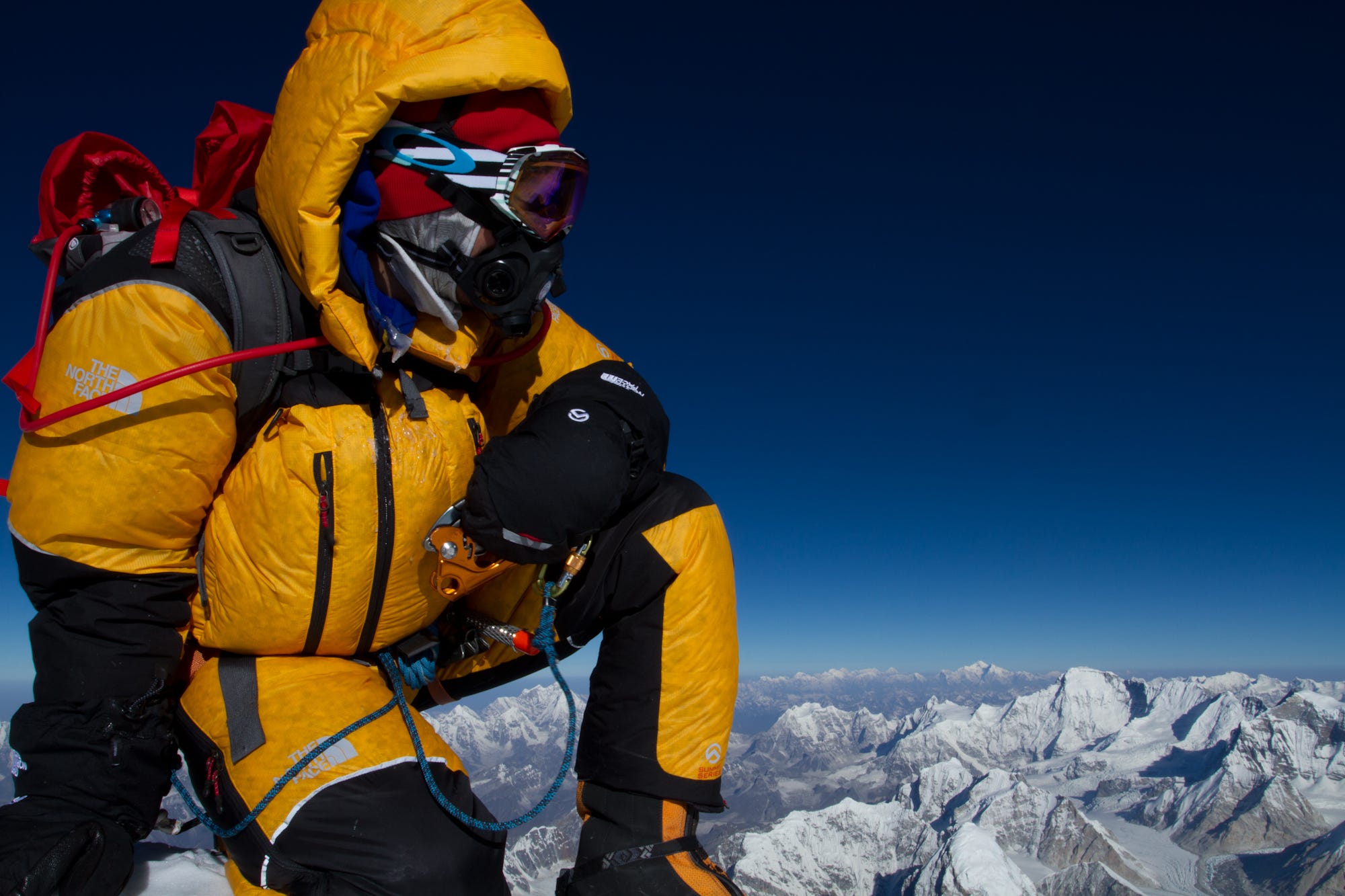
At 3am the next morning, my climbing partner, Panuru Sherpa, and I leave Camp IV for the summit. Like the first Americans to climb Everest in 1963, we are using oxygen. In less than an hour we pass our first body. The corpse is on his side, as if napping in the snow, his head covered by the hood of his parka.
Ten minutes later we pass another body, her torso and head wrapped in a Canadian flag. Twenty minutes later, another corpse, a Korean. Still attached to the rope, he is sitting in the snow, frozen solid as stone, his face black, his eyes wide open. A week earlier, during the first good-weather window, five people died on the South Col route. Why? Through interviews with the Sherpas, I discovered that in every case, the cause of death was arrogance. All five clients were told by their Sherpas that they were moving too slowly, that even if they reached the summit, they would not have the strength to get back down: and yet, all five refused to turn around.
The woman wrapped in the Canadian flag was said to have required nine bottles of oxygen (two or three is typical), before she collapsed. She reportedly told her Sherpa she had paid a lot for this trip and therefore expected to reach the summit.
The Korean, when his Sherpa pleaded for him to turn around before he died, had actually punched his Sherpa. Now, stepping over his icy corpse, his eyes lifeless, his face frozen in a rigid grimace, I overcome the gruesomeness of the scene by reminding myself that the mountain did not kill these climbers, they killed themselves. Panuru and I don’t submit ourselves to the stop-and-go traffic on the fixed lines. He taps me on the shoulder and motions for me to go around. I gladly unclip and climb around a knot of ten climbers. Panuru gives me the thumbs up. We don’t use the ropes. We just climb, swinging our ice axes and kicking in our crampons.
It is still dark but the sky has turned purple when Panuru and I reach the south summit. We traverse the col to the base of the Hillary Step, a 30-foot stone wall. In the past, this obstacle was just a steep ramp of snow, but no longer. The rock has been scratched by thousands of crampon points. Several climbers are working their way up the ropes. Panuru and I swiftly free climb the rock and go around them. We can see the summit now. The snow is glistening with a hard pink light. I feel as if I’m in the center of a fish-eye lens, the world dropping away in all directions. Everything on earth is below me---all the peaks of the Himalaya, even the clouds. The only thing above me is outer space. When Panuru and I summit Mount Everest, the wind is ripping at the Tibetan prayer flags planted at the apex, but we can’t get near them: there are too many people. At this moment, standing on the top of the world, I know I should feel elated. I know this is how the first American summiters felt in 1963. I know this is how I would have felt had I summited in 1986. But climbing Everest was a bigger, richer challenge decades ago. The unknowns were larger, the margins slimmer, the personal effort greater. The truth is, Everest has become domesticated, declawed, downgraded. The majesty of the mountain and the meaning of climbing it have diminished. Climbing Everest was once a triumph of mountaineering prowess. Today, it is trophy hunting.
So, what do I feel standing on the summit of Everest? Relief, and a deep sense of ambiguity. I don’t really deserve the grandeur of the world’s highest peak. It wasn’t a fair fight and I know it.